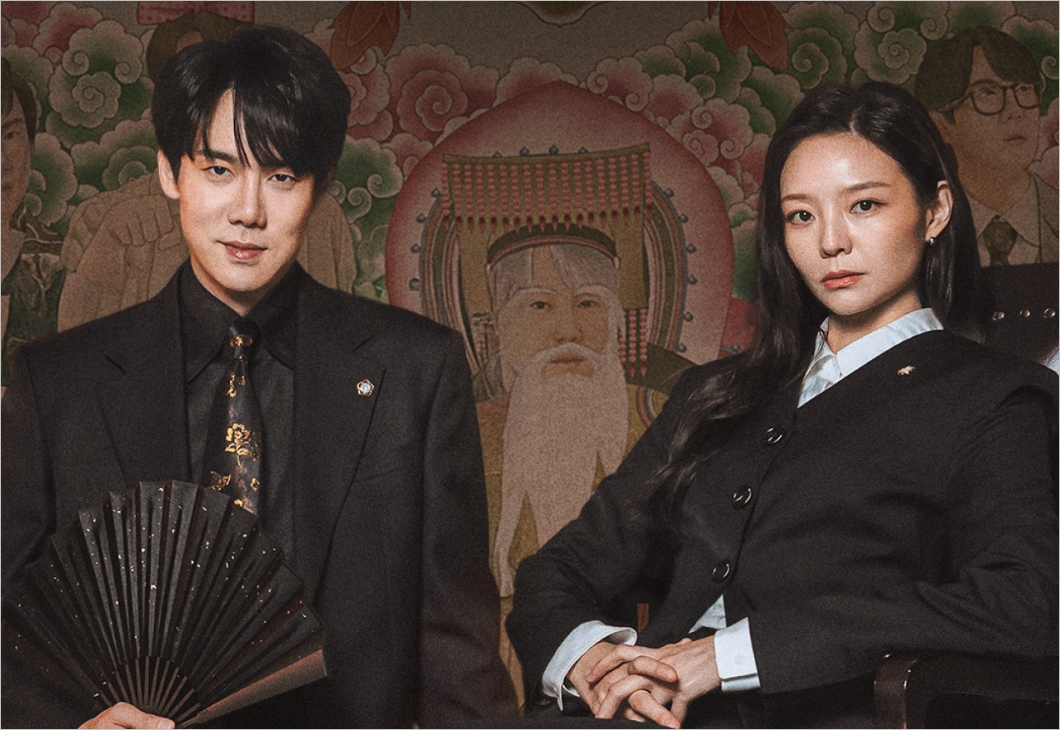
If you’re watching Phantom Lawyer on Netflix and feeling something you can’t quite explain — you’re not alone.
Have you ever lost someone — a parent, maybe — and felt this strange, heavy sadness that you just couldn’t put into words? Not the loud, crying kind of grief. Something quieter. Something that sits in your chest because you never got to say what you needed to say. Because they were gone before you could repay everything they gave you.
If you’ve felt that — even once — then you already know what Han (한, 恨) feels like. You just didn’t have a word for it.
I’m Korean. I was born here, I live here, and I watched Phantom Lawyer here. And I’m telling you — that feeling I just described? It’s in every single episode of this drama. It’s not a coincidence. It’s the entire point.
🇰🇷 What Is Han (恨)? — And Why There’s No English Word for It
Most translators go with “grudge” or “resentment.” Forget those words. They’re too sharp. Too angry. Han is something else entirely.
Here’s the closest I can get:
Han is the feeling of injustice and sorrow so deep, so long-carried, that it becomes quietly part of who you are.
Notice what’s missing from that description? Screaming. Exploding. Demanding justice out loud.
That’s the thing about Han — it doesn’t explode. It settles.
The best way I can explain it? Think about traditional Korean funeral music — jangsonggok (장송곡). If you’ve ever heard it, it doesn’t sound angry. It doesn’t sound dramatic. It’s low, slow, and flows out like a long exhale. Somewhere inside that music, there’s injustice, sorrow, and quiet resignation — all at once.
That’s Han.
Korean pansori (판소리) — traditional narrative singing — carries the same energy. Foreign listeners hear it for the first time and think, “why does this feel so heavy?” They can’t explain it. But something inside them responds. That’s Han reaching across cultures, even without a translation.
Why Does Han Run So Deep in Korea?
To understand why Han feels so familiar to every Korean, you need to look at history.
Korea has endured centuries of invasions, occupations, and suffering at the hands of outside forces. And through all of that — think about how many people died with things left unfinished. Unfairly. Without justice. Without anyone to speak for them.
And the people left behind? They couldn’t always grieve out loud. They couldn’t always fight back. They had to swallow it. Keep going. Carry it.
That weight — passed down through generations — is Han.
It wasn’t created overnight. It was built slowly, layer by layer, across thousands of years of Korean history. And today, even if most Koreans can’t fully articulate it, they feel it. It lives somewhere deep in the Korean emotional vocabulary, as natural and familiar as breathing.
This Is Exactly Why Phantom Lawyer Hits Different
Now let’s bring it back to the drama.
Every episode of Phantom Lawyer follows one ghost — one person who died with something unresolved. A victim of medical malpractice. An idol trainee whose dreams were stolen. Each one carries their own version of Han.
As a Korean watching this, these stories don’t feel like fiction. They feel familiar. Because they echo something we’ve carried collectively for a very long time.
But here’s the moment that non-Korean viewers often find confusing:
When the ghost’s injustice is finally resolved — they don’t cheer. They don’t cry tears of joy. They just… quietly disappear.
I’ve seen international viewers ask: “Wait, why aren’t they happier?”
And honestly? That question tells me everything.
Because Han doesn’t resolve with an explosion. It resolves with a long, quiet exhale. When a Korean watches that ghost finally let go and drift away in silence — we don’t need the fireworks. We feel it in our chest. That stillness is the release. That calm is the relief.
It’s the same feeling as standing at a parent’s grave and finally saying the words you never got to say while they were alive. No fanfare. Just — finally.
That’s Han being set free.
Phantom Lawyer is currently streaming on Netflix, with new episodes every Friday and Saturday through early May 2026.
If you’ve been watching it and feeling something you couldn’t quite name — now you know what it is.