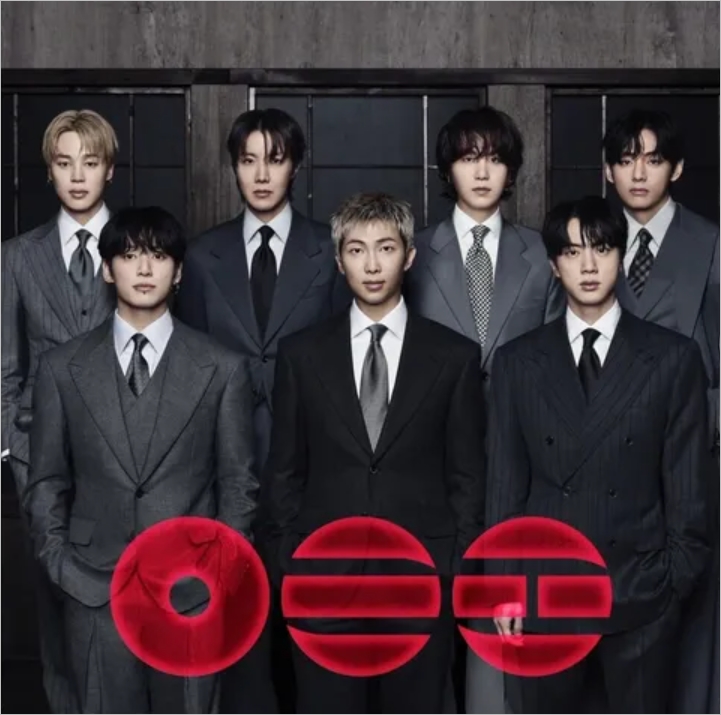
There’s a scene in BTS: The Return where they’re drinking soju after a long day in the studio. One of them says, “The soju tastes sweet today.”
If you’re not Korean, that’s just a line. If you are — it hits different.
I’m Korean. I live in Korea. I watched this documentary here. And I kept catching things that I know most international viewers missed.
Not because you weren’t paying attention. Because some things only land if you grew up with them.
“Country Boys” — What RM Really Meant
At one point in the documentary, RM calls BTS “country boys from Korea.”
If you heard that and thought it was just RM being humble — it’s not. He meant every word.
Think about it. For decades, the center of the music world has been America and Europe. That’s where the stars come from. That’s where the charts live. That’s where the audiences are.
And then here come seven guys from Seoul — a city that, ten years ago, most people in the West knew more for Samsung than for music — saying “we belong here too.”
That’s what “country boys” means. Not country boys within Korea. Country boys on the world stage.
Korea itself was the countryside — the place no one in the global music industry was looking at. No Korean artist had ever topped the Billboard Hot 100. No Korean act had ever sold out stadiums in America, Europe, and South America. No one had spoken at the United Nations.
There was no road. No footprints to follow. BTS had to build it themselves, step by step, with no one ahead of them saying “this is the way.”
When a Korean hears RM say “country boys from Korea,” we hear the full weight of that. It’s not humility. It’s a man standing on the biggest stage in the world, looking back at where he came from, and saying:
We were nobodies from a place no one was watching. And we made them watch.
🇰🇷 The Weight of Arirang
Arirang has no composer. Because every Korean who ever lived is the composer.
Let me explain what that means.
Arirang is a folk song that’s been passed down for centuries — no one knows exactly who wrote it or when. The lyrics are about a lover leaving, about the ache of watching someone walk away over a hill.
But it’s also about losing your country — Korea was occupied by Japan for 35 years. An entire generation grew up without their own country. Arirang became the song people sang when they couldn’t say out loud what they were feeling. That longing became part of the national DNA.

If you want to understand what that era felt like, watch Mr. Sunshine on Netflix. It’s set right before the occupation began — and it will break your heart in ways you didn’t know a TV show could.
Arirang carries han — a Korean emotion I’ve written about before — that heavy, layered feeling of sorrow, resentment, and endurance that has no English translation.
So when I first saw that BTS named their comeback album Arirang, my honest reaction as a Korean was two things at once:
First: “Wait — Arirang? Why? Why go that heavy?”
Second: “They dropped the flashy stuff. They went back to something purely Korean. Only someone who’s already been to the top can strip it down like that.”
And that’s exactly the tension.
Arirang is sacred ground. Touch it wrong, and Koreans will say “How dare you?” Touch it right, and you prove that you’re the only ones in the world who could carry that weight.
For the members, it was something they had to live up to. For the company, it was something they could leverage. Same destination — very different reasons for wanting to get there.
18 Months of Silence — What Military Service Really Takes
If you’re not Korean, you probably think of military service as “they took a break for a couple of years.”
But here’s what most people outside Korea don’t hear about.
There’s a saying in Korean — “he went to the military and grew up.”
It’s not just time lost. For most Korean men, it’s where we became adults. You endure things you didn’t think you could. You go in as one person and come back as someone steadier, someone different.
Now multiply that by being BTS.
The whole world watching the clock. Every headline asking “when are they coming back?” You’re not just worried about staying relevant — you’re carrying the weight of millions of people across every continent.
The documentary captures this perfectly. The urgency once they’re back isn’t just business recovery. It’s identity. We’re still us — but maybe a deeper version of ourselves.
For most Korean men, that transformation is private. For BTS, they had to do it in front of the entire world.
The Soju Scenes — Why Koreans Noticed Something You Didn’t
Let me tell you about soju.
Have you ever had a day so long, so draining, that the moment you sit down with a drink, you can feel your whole body exhale? Not because the drink is special — but because you finally stopped?
That’s what soju is for Koreans.
It costs about two dollars. It’s on every table. And it’s the thing that loosens the words you’ve been holding in all day. Koreans don’t really do the “let’s sit down and talk about our feelings” thing. We do “let’s drink and see what comes out.”
Soju is our confession tool.
There’s a moment in the documentary where one member says, “The soju tastes sweet today.” And another member fires back with a line from Itaewon Class — a Korean drama. Everyone laughs.
If you’re watching with subtitles, you probably just saw two guys joking about alcohol. But for Koreans, that moment is layered.
Here’s why.
“The soju tastes sweet today” is a common Korean drinking phrase. It basically means “the drink is going down easy tonight.” And there’s actually a real reason for it — soju actually does taste different from bottle to bottle. Temperature, ingredients, even the factory it came from. Sometimes it’s a little sweet, sometimes it’s bitter.
So at any Korean drinking table, someone saying “it tastes sweet today” or “it’s bitter tonight” is a running joke — a playful little debate that happens all the time.
But underneath that casual joke, there’s always a layer of real feeling. When someone says the soju is sweet, you know they needed this drink. You know today was a day.
It’s the Korean way of checking in on each other — wrapped in a joke, never too direct, but everyone at the table understands.
And the Itaewon Class callback? That’s the kind of thing only people who share the same cultural memory can do. You quote a drama and everyone instantly gets the reference. No explanation needed.
It’s shorthand for “we’re the same people, we get each other.”
That scene — seven guys drinking soju, debating whether it’s sweet or bitter, quoting dramas at each other — is more Korean than anything else in the entire documentary.
And I bet most international viewers didn’t even blink.
V’s Pyongyang Naengmyeon Moment
When someone asked V about the title track, he said it’s like Pyongyang naengmyeon.
If you know BTS — the explosive choreography, the hard-hitting beats, the stadium-shaking energy — then you’d expect their comeback track to hit you like a truck.
V was basically saying: this one doesn’t. It’s quiet. It’s simple. Compared to what BTS has done before, it might feel underwhelming at first.
And that’s exactly what Pyongyang naengmyeon is.
Korea has many kinds of naengmyeon — some are spicy, some are tangy, some hit you with bold flavors right away. But Pyongyang naengmyeon? It’s none of those things.
You take your first bite and think, “That’s it?” It’s not spicy, not sweet, not sour. It’s the quietest dish on the menu. That’s the comparison V was making — among all the different naengmyeon in Korea, only Pyongyang naengmyeon has that kind of stillness.
Now, V’s comparison stopped there — he was talking about the initial feeling, how the song might seem simple next to BTS’s usual impact.
But here’s what makes his analogy land even better: Pyongyang naengmyeon has this thing where, three days later, you catch yourself thinking about it. You want it again. You can’t explain why, but that simplicity stays with you.
It doesn’t grab you — it finds you later.
And that’s exactly what SWIM turned out to be. V nailed the comparison. Whether he meant all of that or not — it landed perfectly.
And if you think about it, that’s what Arirang is too. It’s not a song that tries to impress you. It’s been around for centuries because it doesn’t need to.
What Koreans Are Actually Saying
Here’s something international fans might not expect: the most talked-about thing in Korean online communities wasn’t the music.
It was the scenes where BTS and their company disagreed.
In the old days of K-pop, you’d never see that. The whole industry was built on mystique — perfect choreography, flawless visuals, and absolutely no behind-the-scenes conflict. If an idol had a disagreement with their company, it stayed behind closed doors.
That was the rule.
But The Return showed it. Raw. Members pushing back on creative decisions. Tensions about direction.
And the fact that the company chose to leave those scenes in tells you something important — actually, two things.
Yes, there’s a marketing angle. They knew that today, honesty sells better than perfection. The old playbook would’ve edited it all out. Showing the conflict actually makes BTS look more credible, not less.
But it’s more than just smart marketing. This is who they’ve always been.
From the very beginning, BTS and their company built their identity on showing the real thing — the behind-the-scenes vlogs, the unfiltered moments, the messy creative process. While other agencies sold perfection, Big Hit sold authenticity.
That wasn’t a strategy they stumbled into — it was a philosophy.
Leaving those conflict scenes in wasn’t just a calculated move. It was consistent with something they’ve believed from day one: show it as it is. The real thing, not the polished version.
Korean fans largely respected it. The reaction wasn’t “oh no, they’re fighting.” It was more like “finally — they’re being treated like artists, not products.”
P.S.
RM called them country boys.
And maybe that’s exactly what they are — seven guys from a country no one in the music industry was watching, who picked up Arirang, the oldest song their nation has, and carried it to every stage on earth.
The soju tasted sweet that day.
In Itaewon Class, there’s a famous line. A father asks his son, “How does the soju taste?” The son says, “Sweet.” And the father replies:
“It means today was a day worth remembering.”
I think that’s exactly what that soju scene was. Seven country boys from Korea, drinking together after building something no one thought they could.
The soju was sweet. The day was worth remembering.
If you haven’t seen the documentary yet — watch it. But maybe grab a bottle of soju first.