If you’ve been watching K-dramas for a while, you’ve heard it a hundred times.
Have you eaten? (밥 먹었어?)
Parents say it to kids. Friends say it to friends. Someone says it to the person they have a crush on. Co-workers say it before anything else. And if you’re not Korean, you’ve probably wondered — why? Why does this show up everywhere like a greeting?
I’m Korean. I was born here, I live here, and I’m going to tell you something most international viewers miss about that line.
It’s a greeting. And it isn’t. The reason it feels like both is buried in Korea’s past — a past most of the world has forgotten.
First, let’s clear something up.
Koreans don’t actually use “Have you eaten?” instead of hello. Our everyday greeting is “안녕하세요” — just like “hi” in English.
“Have you eaten?” comes out on different layers. Sometimes it’s just a casual greeting around mealtime. Sometimes it’s a parent genuinely checking if their kid skipped lunch.
And sometimes — this is the one K-dramas love — it carries what words can’t.
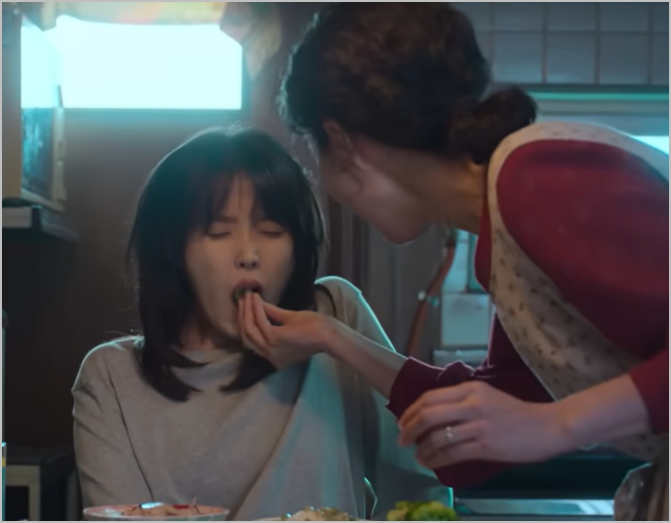
You’ve probably seen this scene. Someone is falling apart. A friend, a parent, a sibling sits across from them and says, “밥은 먹었냐? 가자, 밥 먹으러.”
The person doesn’t want to eat. But the other keeps pushing the bowl. “It’s okay. Eat first. Then we’ll figure it out.”
In Korea, food is strength itself. So that bowl isn’t just food. It’s “get your strength back” and “I believe in you — you’ll come through this” at the same time.
And that’s why, in that moment, gratitude and sorrow cross on the hurting person’s face — and the tears come.
So where does this come from? Why does food carry this much weight in Korea?
Not so long ago, Koreans were hungry.
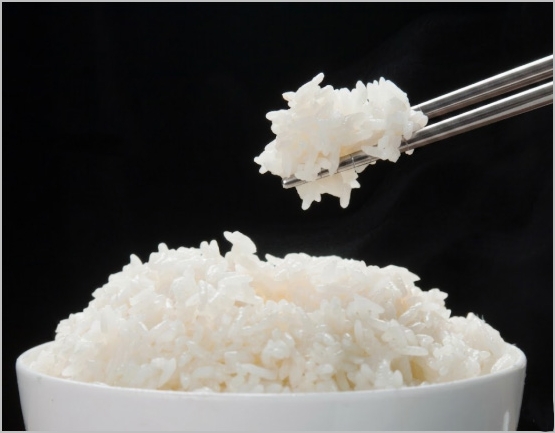
Occupation, war, poverty — Korea spent most of its modern century worrying about the next meal. Pure white rice was a luxury. Families stretched what they had by mixing in barley, peas, whatever added volume to the bowl. Going hungry wasn’t a metaphor. It was Tuesday.
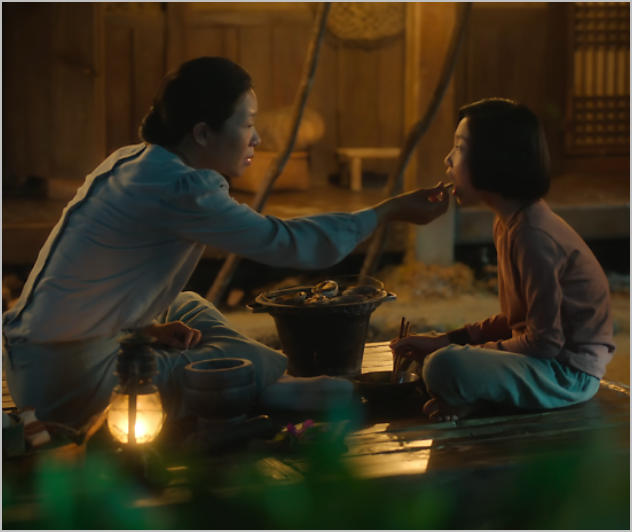
If you’ve watched When Life Gives You Tangerines on Netflix, you’ve seen that era up close. It’s set in exactly that time — when parents watched their kids eat first, and finished whatever was left over.
Here’s the part most international viewers can’t fully feel.
The generation that lived through that time raised the generation that’s alive now. Our parents and grandparents. And they carried a specific fear with them for the rest of their lives — the fear that their kids would go hungry.
There’s a Korean word for what they felt: “안쓰럽다” (ansseureopda).
English doesn’t quite have it. It’s not pity. It’s not just sadness. It’s the ache you feel watching someone you love in a state you’d do anything to fix.
That feeling is what got passed down. Not the hunger. The ache.
And that’s why Korean parents ask “Have you eaten?” even now, when nobody is actually starving. The question is older than the people asking it.
When I was a kid, my mother didn’t ask “Have you eaten?” first.
First, she called my name from the front door.
“상민아~~ 그만 놀고 와서 밥먹어!” “Sangmin-ah~~ stop playing, come eat!”
Every evening. Every street in Korea. When the sun started going down, you could hear mothers calling their kids home from every direction. That was how playtime ended — a mother’s voice cutting through a summer evening.
I didn’t think much of it then. You’re a kid. You groan, you drag your feet, you go home.
But then I became a parent. And I understood something. My kids are right here with me — and I still miss them.
I’ve heard America has something a little similar.
Chicken soup.
Not the soup itself — the idea of it. Mom’s chicken soup when you’re sick. Grandma’s chicken soup when you come home from college. It’s not really about the chicken. It’s about someone caring enough to make it for you.
These days, kids don’t play in the streets anymore.
They’re inside, on YouTube, on their phones. The evening sound of mothers calling names — that’s mostly gone now.
But “Have you eaten?” stayed.
Now it’s texted. Now it’s asked through a bedroom door instead of from a front porch. The scene is different. The question is the same.
Some things survive even when the world around them changes.
Next time you hear it in a K-drama — that one line, “밥 먹었어?” — you’ll know.
It can be a greeting. It can be comfort. It can be a question about your body.
P.S.
There’s a scene in When Life Gives You Tangerines.
The daughter, living away from home, has received what must be a thousand phone calls from her mother asking if she’s eaten. One day, she feels a sudden, desperate hunger. She wants her mother’s food.
She shows up at the door.
“엄마. 나 밥.” “Mom. Food.”
“아니 어떻게 지금 왔어.” “How are you here now?”
“나, 배고파.” “I’m hungry.”
“있어 있어. 밥 금방 돼. 기다려.” “I have it, I have it. The rice will be ready in a minute. Just wait.”
Here’s what a foreign viewer might miss.
Rice takes twenty minutes. Minimum.
But Korean mothers always say “it’ll be ready in a minute.” Because they want to give their child freshly cooked warm rice.